
Decision guides
Repair or Replace: When an Old AC Is Not Worth Fixing
To decide whether to repair or replace an AC, weigh three things: how old the system is, how big the quote is and what shape your ducts are in. A small repair on a sound system usually wins. A major failure on an aging unit, with leaky ducts behind it, usually does not. No formula decides it for you.
- CSLB C-20 #776028
- 4.8 from 16 Google reviews
- Shop in USA Business Park
- Open Mon to Sat, 9 to 5
By Proair Air Conditioning Services, CSLB C-20 License #776028. Published October 30, 2026. Updated October 30, 2026.
Start with the fault, not the age
Get a real diagnosis before you decide anything. Age matters, but a 14-year-old unit with a failed capacitor is a different case from one with a failed compressor. Ask what failed, why it failed and what else is close behind it. Then put an AC repair price next to a replacement price. If you are still troubleshooting, start with the 7 common causes of warm air.
Old AC, new problem? Get both prices.
Call Proair for a clear, upfront quote on the repair and on replacement, so you can compare them.
- CSLB C-20 #776028
- 4.8 from 16 Google reviews
- Shop in USA Business Park
- Open Mon to Sat, 9 to 5
How much does the age of the AC matter?
It sets the odds. ENERGY STAR suggests considering replacement once an AC or heat pump is more than 10 years old, because a new qualified model can use less energy. That is a point to start thinking, and it is not an expiration date. A well-kept system can run past it. South Gate’s cooling season, with fewer than 10 days above 90°F in a typical year by Best Places’ estimate, is easier on equipment than a desert climate.
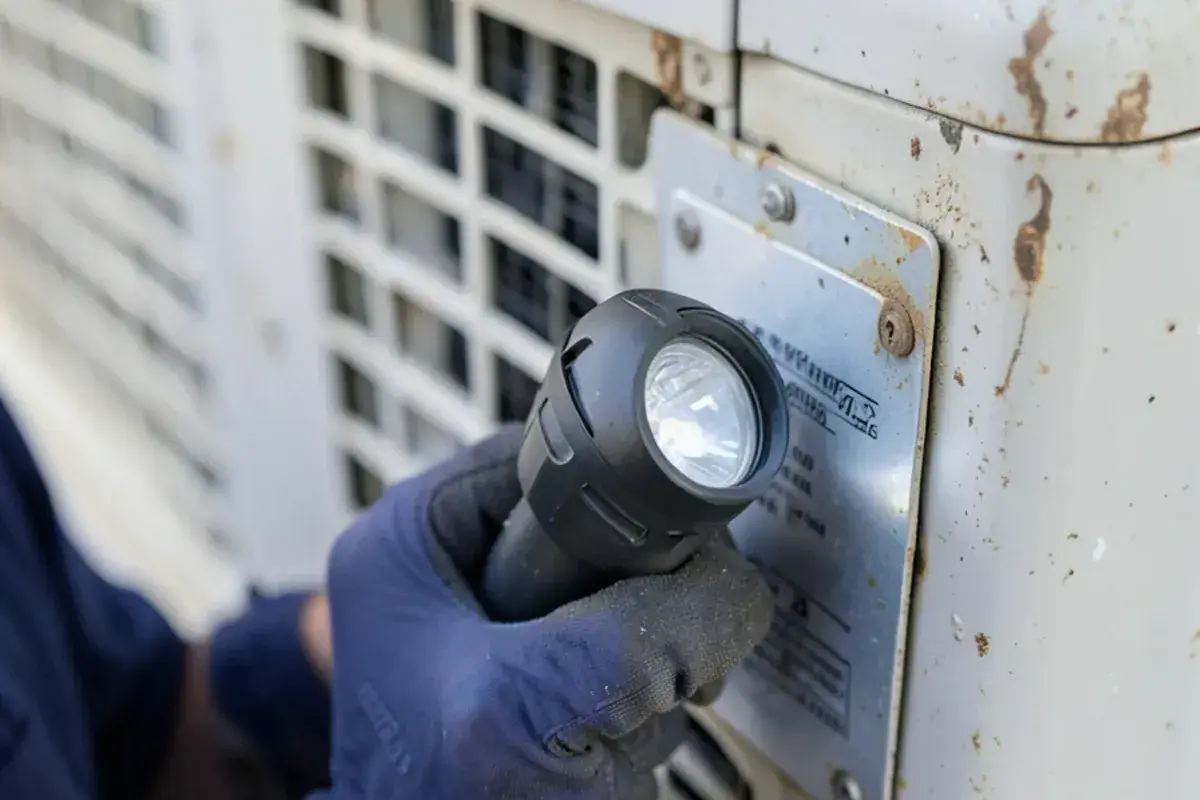
The refrigerant is part of age. Check the nameplate. Many older systems use R-22, and EPA says you may keep using it in an existing system for as long as you need. No rule forces you to replace it. But new production and import of R-22 ended January 1, 2020, so servicing relies on recovered, reclaimed or stockpiled supply, and EPA warns that service costs may rise.
What if the nameplate says R-410A?
That is no reason to panic-buy. EPA says you can keep repairing an existing system, including major parts such as a compressor. It also warns that HFC refrigerants and parts may get harder to find, so ask about supply before a big repair.
How do you judge the repair quote?
Look at what the money buys. You will see percentages and multiplication rules online for this decision. They are shortcuts from the trade, and no agency or manufacturer stands behind them. Use your own numbers instead. Two published 2026 ranges give a sense of scale: Homeyou lists South Gate AC repair at $338 to $487, and HVAC Project Cost puts full HVAC replacement in California at $6,500 to $16,000. Neither is a Proair quote, and your home can land outside both.
Manta’s 2026 AC install average for South Gate is $2,976, in a range of $2,573 to $3,380, excluding permits and taxes. The $6,500 figure covers full HVAC. A $487 repair is about 16% of the first and 7.5% of the second, so a routine fix rarely decides anything.
A few questions sort most quotes:
- Does this repair fix the cause, or only the symptom?
- Is this the second or third repair in a couple of years?
- Does the job involve refrigerant, and is there a leak behind it?
- What parts warranty applies, in writing?
- What will this unit likely need next?
One catch surprises people. Replacing a coil, a condenser or an air handler can count as an alteration under California’s Energy Code, and that brings a duct test even if you call it a repair. Ask if your repair quote includes that scope. A capacitor or contactor swap does not bring it.
Why do your ducts change the answer?
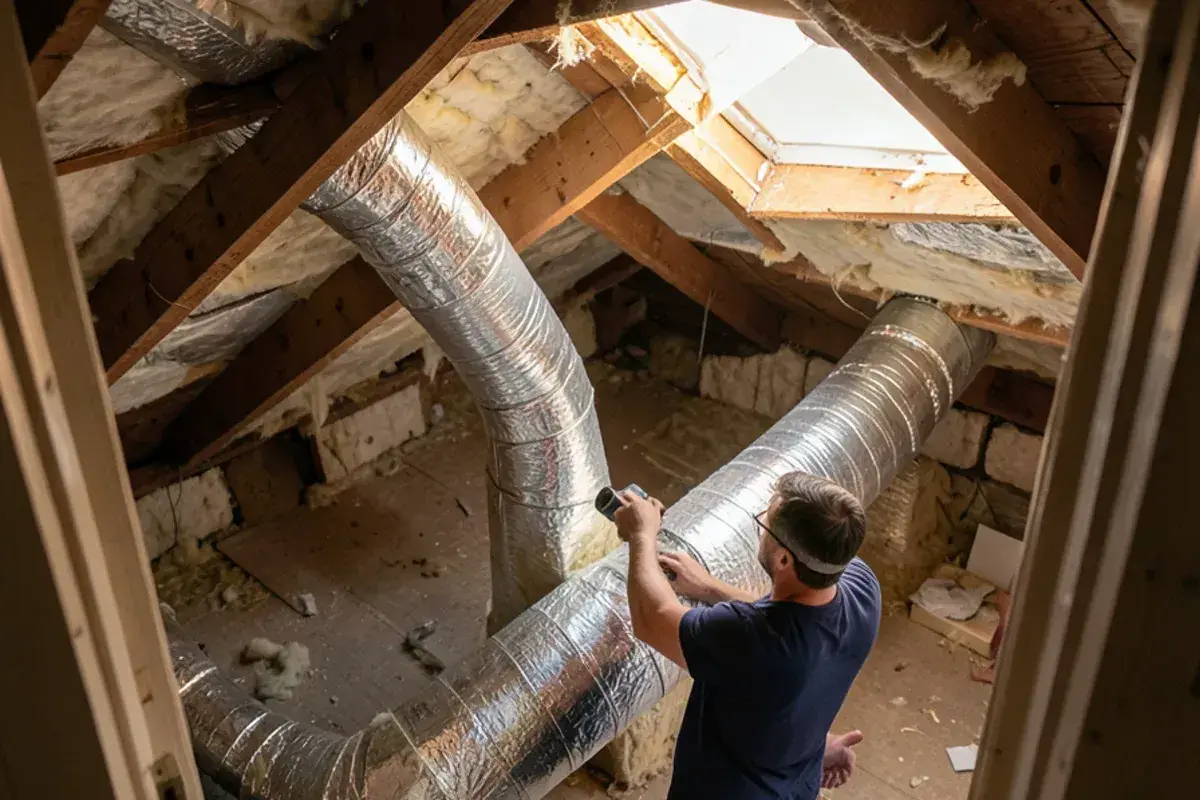
Because they are part of the system. New equipment on leaky ducts gives you a new unit that still loses air in the attic. The 2025 Energy Code holds the connected ducts on a change-out to 10% total leakage, or 7% to outside. If they cannot get there, an ECC-Rater (formerly called a HERS rater) verifies that all accessible leaks are sealed. Our energy rules guide has the details.
So bad ducts push the decision both ways. They raise the cost of replacement. They also mean a replacement can fix comfort problems a repair never would. Hot back rooms, weak airflow and high bills are good reasons to look at the whole system. South Gate’s housing skews to the 1940s and 1950s, so ask for a duct check before you decide.
How do you compare two prices fairly?
Get the repair in detail
Part, labor, refrigerant, and what the repair leaves unfixed.
Price a real replacement
Equipment, coil, duct sealing, permit and rater.
Count your years in the house
Moving soon favors a repair. A long stay favors the whole fix.
Divide each price by the years it buys
Ask what the repair buys, then compare the yearly cost of each path.
Ask to see the readings
Amp draw and pressures back up a failed compressor. Bias runs both ways: system sellers may push replacement, and repair shops may keep patching.
Should you repair or replace your AC? Use this table
Find the row closest to your situation. These are leanings based on the factors above, not rules.
| Your situation | Lean toward | Why |
|---|---|---|
| Under 10 years old, minor electrical part | Repair | Sound system, small cost |
| Over 10 years old, minor part, no other issues | Repair, and start planning | Buy time while you save and compare |
| Any age, repeat refrigerant leaks | Find the leak or replace | Recharging alone repeats the bill |
| Over 10 years old, compressor or coil failed | Price replacement first | Major spend on aging parts |
| R-22 system with a major fault | Lean replace | Costly refrigerant plus major repair |
| System fine, comfort poor, ducts leaky | Fix ducts first | New equipment will not solve it |
| Oversized unit that short cycles | Plan a sized replacement | Short cycling means rapid on and off, and it wears parts |
ENERGY STAR’s two-column test
ENERGY STAR publishes one real test: if two or more items in the right column apply, it is probably time to consider a new system. The guide is older and comes from a program that promotes efficient equipment.
| Keep repairing if | Consider replacing if |
|---|---|
| Under 10 years old | Over 10 years old |
| Good service record | Repeat problems |
| Only a minor repair is needed | Extensive or costly repairs are needed |
| On and off cycling is not excessive | Cycling seems excessive |
| Performing as expected | Not performing as expected |
| Moving soon | Staying a long time |
What should you check before buying a new AC?
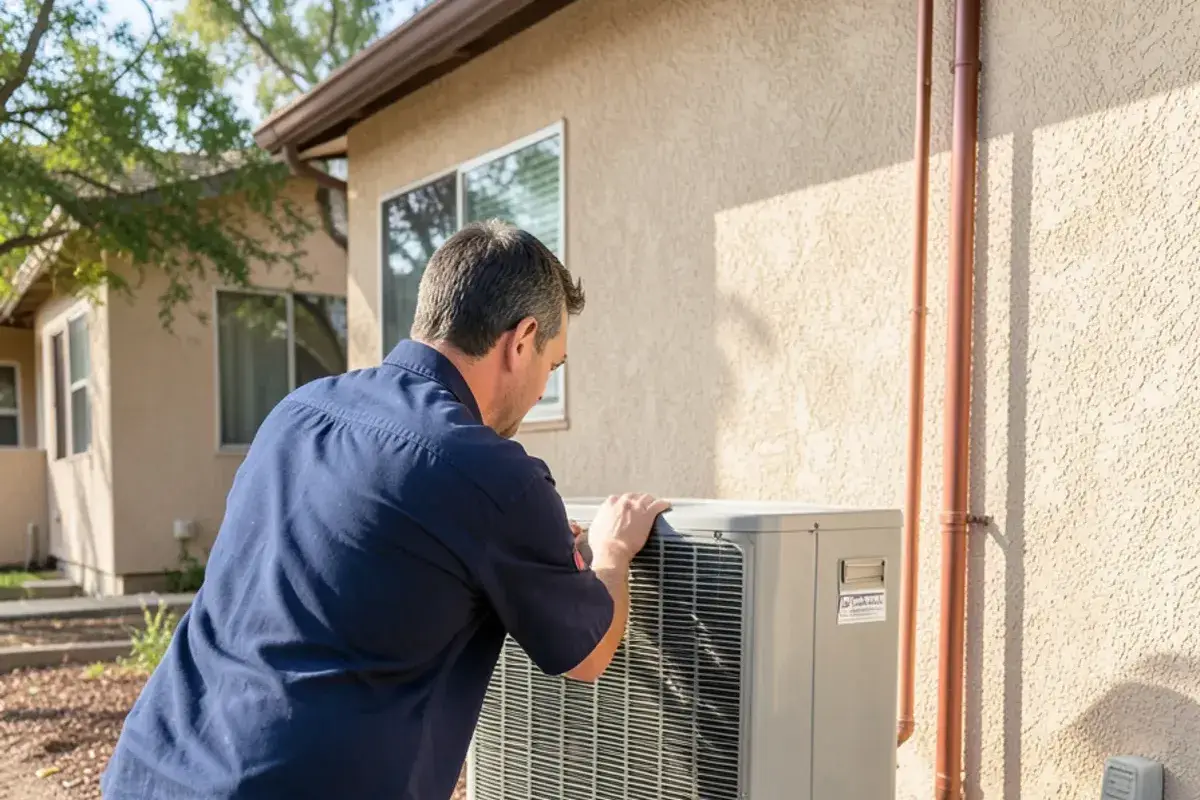
If you lean toward AC replacement, the quote should cover the following:
- Sizing: a Manual J load calculation for your home. Do not match the old unit by default.
- Efficiency: the Southwest minimum is 14.3 SEER2 for split ACs under 45,000 Btu/h.
- Refrigerant: ask which one the quote specifies.
- Permit and rater: both named in the scope.
- License: a C-20 you can verify on the CSLB site.
ENERGY STAR’s line for a furnace is 15 years, and it notes that a heat pump can replace a central AC. See our heat pump vs furnace guide.
Do not count on incentives. The federal 25C tax credit ended for property placed in service after December 31, 2025, and HEEHRA and TECH single-family funds have been reported as fully reserved. Check programs directly before you budget around one.
We are based in South Gate, on Paramount Boulevard, and we cover Compton, Lynwood and nearby cities. Call and tell us the age of the unit and what failed.
Census estimates put 58.6% of Compton homes before 1960, so price the ducts with any replacement there. If you plan to sell in Lynwood, the city requires a real property report first, so ask what it covers and keep your permit records.
Fix the small faults and price the big ones
A small fault on a sound system gets repaired. A major fault on an aging system gets two prices side by side, with the ducts in the replacement number. Call us before you approve either one. We will test the system, tell you what failed and give you a clear, upfront quote on both.
Sources
- ENERGY STAR: When Is It Time to Replace?
- EPA: Residential Air Conditioning and the Phaseout of HCFC-22
- EPA: Purchasing and Repairing Home Air-Conditioners or Heat Pumps
- California Energy Commission: 2025 Single-Family Compliance Manual, Chapter 9
- CSLB: Check a License
- ENERGY STAR: Repair or Replace? You Decide
- ENERGY STAR: Consider a Heat Pump to Replace Your Central Air Conditioner
- EPA: Frequent Questions on the Phasedown of Hydrofluorocarbons
- Census Reporter: Compton, CA, ACS 2020 to 2024
- City of Lynwood: Building and Safety Division
Repair or Replace an Old AC questions
Should I repair or replace a 15-year-old AC in South Gate?
It depends on what failed. A capacitor or contactor on a 15-year-old South Gate system is often worth fixing, since the part is small and the unit may still have working years. A failed compressor or a leaking coil at that age usually calls for a replacement price first. Compare both quotes, then look at your ducts before you decide.
Is it illegal to keep an old R-22 air conditioner?
No. EPA does not require you to replace or convert an existing R-22 system, and you can keep using it. The change is on the supply side. New R-22 production and import ended in 2020, so service relies on reclaimed or stockpiled refrigerant. Ask the technician about availability and cost before you approve a recharge on an older unit.
Does a new AC fix hot rooms in an older Compton home?
Not by itself. Hot rooms in older homes often trace to leaky or undersized ducts, thin attic insulation or sun load on the windows. A new unit on the same ducts can leave the same room hot. Ask for airflow readings at the weak registers and a load calculation, so the replacement plan addresses the actual cause.
Is a new compressor worth it on a 12-year-old AC?
Usually not without a replacement price beside it. At 12 years the unit is past ENERGY STAR’s 10-year line, and the compressor is the costliest part in it. Ask why it failed, because a leak can take the next one too. If you are selling a South Gate home soon, the repair can still be the honest answer.
Do I have to replace a working AC just because it is over 10 years old?
No. Nothing requires it, and EPA says consumers can use their equipment until the end of its useful life. South Gate’s heat comes in short spells, so a well-kept unit can keep going. Get a replacement price during a mild month anyway. That way, a failure in a heat spike does not force a rushed purchase.
Weighing repair against replacement?
Call Proair for a clear, upfront quote on both. We will explain the fault, the options and what your ducts mean for the decision.
- CSLB C-20 #776028
- 4.8 from 16 Google reviews
- Shop in USA Business Park
- Open Mon to Sat, 9 to 5
Related services
Helpful reading