
Comparison and decision guides
Heat Pump vs Furnace: Which Fits a California Home?
Heat pump vs furnace in California comes down to your climate, your gas and electric rates, and what your ducts and electrical panel can carry. South Gate's mild weather suits a heat pump well, and it replaces the air conditioner too. A gas furnace stays the simpler swap when your AC is healthy and your bill favors gas.
- CSLB C-20 #776028
- 4.8 from 16 Google reviews
- Shop in USA Business Park
- Open Mon to Sat, 9 to 5
By Proair Air Conditioning Services, CSLB C-20 License #776028. Published October 30, 2026. Updated October 30, 2026.
What does each system actually do?
A heat pump moves heat. In summer it works as an air conditioner, and in winter it runs in reverse and pulls heat from outdoor air. A furnace burns gas to make heat, so most homes pair it with a separate AC for cooling.
| Question | Heat pump | Gas furnace with AC |
|---|---|---|
| Equipment to own | One system for heating and cooling | A furnace and a separate AC |
| Energy used for heat | Electricity | Natural gas, plus electricity for the blower |
| Efficiency rating | SEER2 for cooling, HSPF2 for heating | AFUE for heating, SEER2 for the AC |
| Combustion and venting | None | Needs a sound vent and a carbon monoxide alarm |
| Most likely upgrade | Electrical panel or circuit | Vent work on some replacements |
Weighing a heat pump against a new furnace? Call us.
Tell us what you have now and what is failing. Call for a clear, upfront quote on the options that fit your home.
- CSLB C-20 #776028
- 4.8 from 16 Google reviews
- Shop in USA Business Park
- Open Mon to Sat, 9 to 5
Why does South Gate's mild climate favor a heat pump?
Best Places estimates about 9.6 days a year above 90°F in South Gate, with summer highs in the mid-90s and occasional triple digits. Winters are short and mild. The U.S. Department of Energy says heat pumps can be an energy-efficient alternative to furnaces and air conditioners in moderate climates, and this is that kind of climate.
Cooling demand here runs into October, so a home with no AC often wants cooling as much as it wants new heat. Buying one machine for both jobs is the main appeal. If you already have a healthy AC and only the furnace failed, that appeal shrinks.
What SEER2 and HSPF2 mean
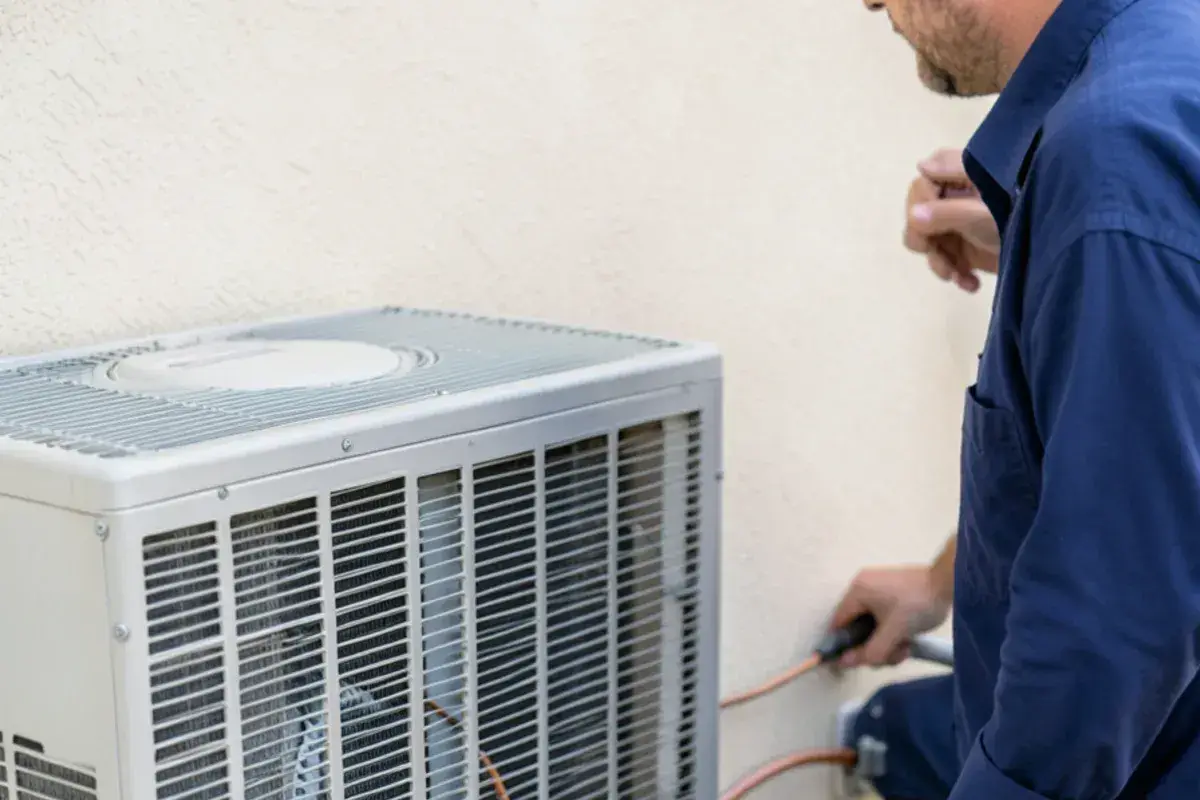
SEER2 rates cooling efficiency and HSPF2 rates heating efficiency over a season. Higher is better on both. The federal minimums for split systems in the Southwest region are 14.3 SEER2 for ACs under 45,000 Btu/h, 13.8 SEER2 at 45,000 Btu/h and up, and 14.3 SEER2 with 7.5 HSPF2 for heat pumps.
Heat pump vs furnace costs: how to run your own rate math
We will not quote a savings figure here, because rates change and every bill differs. South Gate homes use Southern California Edison for electricity and SoCalGas for gas, so check the names on your bill and use your own prices. Then compare the cost of the same amount of heat.
Find your prices
Take the total price per therm from your gas bill and the price per kWh from your electric bill, including delivery charges.
Price furnace heat
Divide the gas price by the furnace AFUE. An 80 percent furnace is 0.80. That gives you the cost of 100,000 Btu delivered.
Price heat pump heat
Divide HSPF2 by 3.412 to get a seasonal efficiency figure. A 7.5 HSPF2 unit works out to about 2.2. Multiply your kWh price by 29.3, then divide by that figure.
Compare, then add cooling
The lower number wins on winter energy cost. Then weigh the price of the full system, since a heat pump also replaces the AC.
Those constants are plain unit math: EIA lists 100,000 Btu in a therm and 3,412 Btu in a kWh. Edison's allocations also consider whether electricity is your primary heat source, so ask Edison how a switch changes your plan before you decide.
A worked example at 2026 averages
These are published averages, not your bill. SCE’s June 2026 advisory lists 34.4 cents per kWh, or $10.08 per 100,000 Btu. SoCalGas’s January 2026 alert lists $2.08 per therm, the latest bundled average we could find.
| System | Math | Cost |
|---|---|---|
| Gas furnace, 80% AFUE | $2.08 ÷ 0.80 | $2.60 |
| Heat pump at the 7.5 HSPF2 minimum | $10.08 ÷ 2.2 | $4.58 |
| Heat pump at a COP of 3 | $10.08 ÷ 3 | $3.36 |
At these averages, gas wins the winter energy line. A heat pump would need a seasonal COP (heat out over energy in) near 3.9 to match an 80 percent furnace, and the CEE homeowner guide says a typical unit tops 3. Tiers and your own plan can move that, and few heating hours shrink it.
What do they cost to install?
HVAC Project Cost’s 2026 figure for full HVAC replacement in California is $6,500 to $16,000, a statewide range and not a Proair price. Set a heat pump against a furnace and AC replaced together.
How does the heat feel, and what about upkeep?
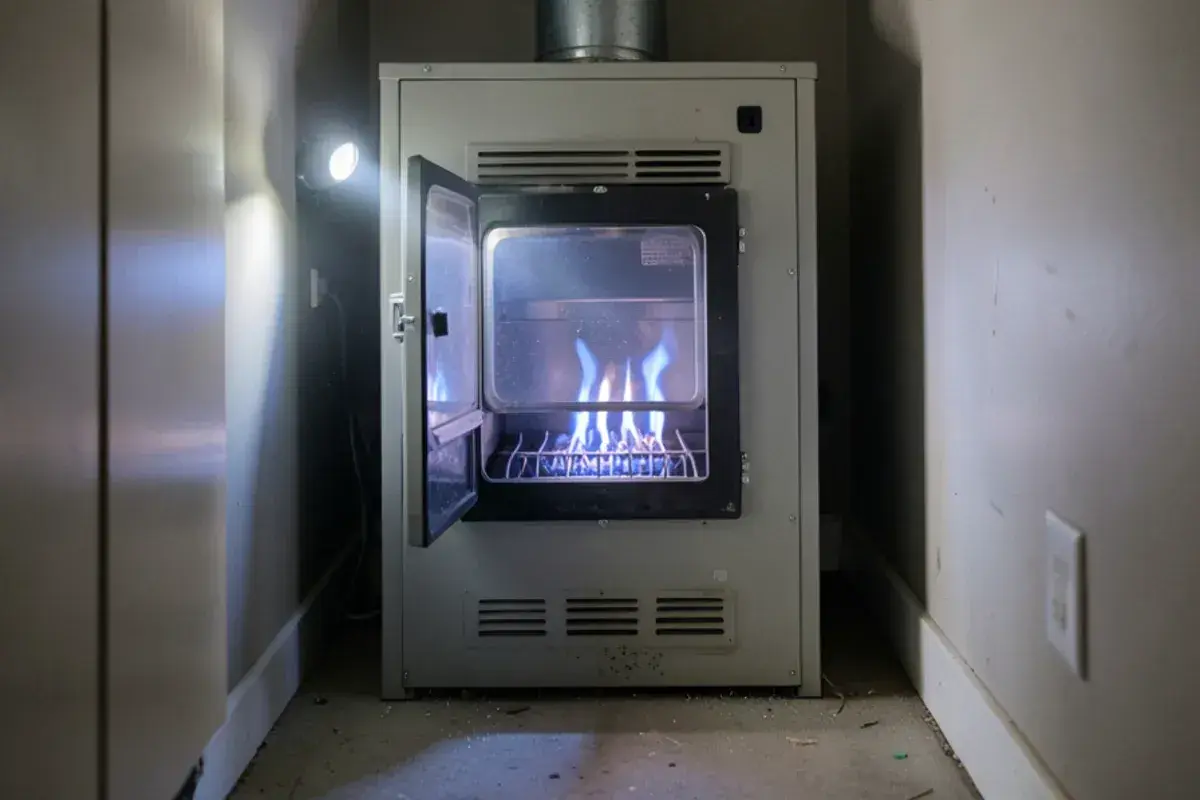
A furnace sends hot air in shorter bursts. A heat pump runs longer at a gentler temperature, and CEE advises against thermostat changes of 3°F or more, so it rewards a steady setting.
CEE puts a typical heat pump lifespan at 15 years, with service every 1 to 2 years. Frost is the heat pump’s quirk, and why a heat pump freezes up separates normal from a fault.
What rules apply to a replacement?
The 2025 Energy Code applies to permit applications filed on or after January 1, 2026. The California Energy Commission's manual says replacement heat is limited to natural gas, propane or the existing fuel type, and the only electric option is a heat pump.
- Ducts: connected ducts must test at 10% total leakage or less, or 7% to outside. If neither is possible, accessible leaks are sealed and checked by smoke test.
- Rater: an ECC-Rater (formerly called a HERS rater) verifies the work. Contractors cannot self-certify those items.
- Refrigerant charge: the Commission lists charge verification for heat pumps in all climate zones.
- Sizing: ask for a Manual J load calculation, the sizing math for your house. Oversized systems short-cycle, meaning they turn on and off too often.
- Gas furnaces: South Coast AQMD Rule 1111 keeps a 14 ng/J NOx limit on new fan-type central furnaces. Check current status, since further amendments have been noticed.
Ask which refrigerant the quote specifies, and who obtains the mechanical permit. In South Gate that goes through the Building and Safety Division. In unincorporated Walnut Park, the county handles permits instead of a city hall.
What is the rebate status right now?
Plan the project as if no rebate will arrive, then treat anything you receive as a bonus. Funding on these programs moves quickly, so confirm directly with each program. Our guide to California HVAC rebates lists what to check.
- Federal 25C tax credit: ended for property placed in service after December 31, 2025.
- HEEHRA: single-family funds reported fully reserved statewide, with new requests waitlisted.
- TECH Clean California: single-family heat pump incentives reported fully reserved, so check the program site for current status.
- SoCalGas Home Energy Efficiency Rebate: furnace rebates are listed by efficiency on the 2026 form. Applications must be postmarked by December 31, 2026, subject to funding.
Which one fits your home?
Use these as a first sort. A load calculation and a look at your panel and ducts finish the decision.
- Lean toward a heat pump installation if the AC and furnace are both aging, or the home has no cooling at all.
- Lean toward a heat pump if your panel has room and your rate math comes out close.
- Lean toward a furnace replacement if the AC is healthy and only the furnace failed.
- Lean toward gas if your panel is full and an upgrade would break the budget.
- Ask about a dual fuel setup if you want electric heat most days with gas held in reserve.
- No ducts? A ductless mini split is usually a heat pump too, and a wall heater home has its own choices.
Census estimates show 13.9% of Lynwood homes and 16.3% of Walnut Park homes with no heating fuel, against 5.4% countywide. There, one system for both seasons deserves a price.
Let your bills, panel and ducts decide
A heat pump handles South Gate winters, so climate rarely settles this. Rates, the age of the AC and what the panel and ducts can carry do. Bring us your last Edison and SoCalGas bills, and we will explain the trade-offs and give you a clear, upfront quote on both.
Sources
- U.S. Department of Energy: Heat Pumps
- California Energy Commission: 2025 Single-Family Compliance Manual, Chapter 9
- U.S. Energy Information Administration: British thermal units
- Southern California Edison: Tiered Rate Plan
- South Coast AQMD: Rule 1111 and Rule 1121
- SoCalGas: 2026 Home Energy Efficiency Rebate application
- Southern California Edison: Rates Advisory, June 1, 2026
- SoCalGas: Rate Alert, January 2026
- DOE-hosted homeowner guide: You Installed an Air Source Heat Pump. Now What?
- Census Reporter: Lynwood, CA, ACS 2020 to 2024
- Census Reporter: Walnut Park, CA, ACS 2020 to 2024
Heat Pump vs Furnace questions
Can a heat pump heat a South Gate home on its own?
Yes, in most cases. South Gate winters are mild, and the Department of Energy describes heat pumps as a fit for moderate climates. The system still has to be sized to your home with a Manual J load calculation. Older houses with air leaks or uninsulated walls can need more capacity than the old furnace label suggests, so ask for the math.
Do I need new ducts to switch from a furnace to a heat pump?
Not always, but expect the existing ducts to be tested. Replacing equipment triggers sealing and ECC-Rater verification of connected ducts under the 2025 Energy Code. Ducts can also be too small for the airflow a heat pump needs. In many homes built between 1940 and 1959, ducts are the part of the quote that moves most.
Will a heat pump need an electrical panel upgrade in an older home?
It might, and it is worth checking before you sign. A heat pump adds a large electric load, and an older panel may have little room left, especially if the house already has added circuits. Ask for a load check of the panel in the quote. Any upgrade should be listed as its own line, with permit and utility work named.
Is a heat pump cheaper to run than a gas furnace in Southern California?
Not at 2026 average rates. At 34.4 cents per kWh from SCE and $2.08 per therm from SoCalGas, an 80 percent furnace delivers heat for less than a minimum-efficiency heat pump. Your plan and equipment can narrow that, and short South Gate winters shrink the yearly gap.
Can I keep my gas furnace and add a heat pump in South Gate?
Yes, that is a dual fuel setup. The heat pump carries most hours and the furnace covers the rest. CEE suggests setting a kept heating system 2 to 4 degrees below the heat pump’s setpoint. In South Gate that backup may rarely run, so ask what the controls add to the quote.
Ready to price a heat pump and a furnace side by side?
Call Proair for a clear, upfront quote. We are open Monday to Saturday, 9 to 5.
- CSLB C-20 #776028
- 4.8 from 16 Google reviews
- Shop in USA Business Park
- Open Mon to Sat, 9 to 5
Related services
Helpful reading
Areas we serve