
Emergency guides
No Heat at Night: Safe Steps Before You Call a Technician
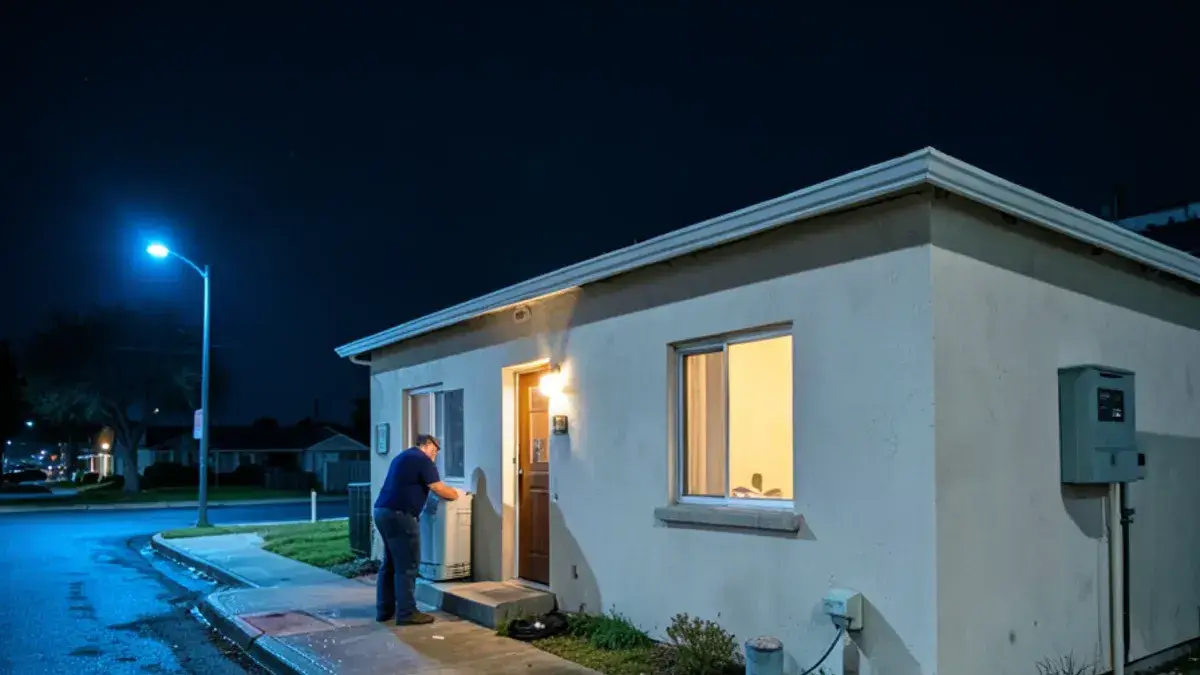
No heat? What to do first is rule out gas and carbon monoxide, then check the thermostat, the power and the filter. If you smell gas or a CO alarm sounds, leave the house and call 911, and save everything else for a daytime call.
- CSLB C-20 #776028
- 4.8 from 16 Google reviews
- Shop in USA Business Park
- Open Mon to Sat, 9 to 5
By Proair Air Conditioning Services, CSLB C-20 License #776028. Published October 30, 2026. Updated October 30, 2026.
No heat? What to do before you touch the furnace
Start at the thermostat and work toward the furnace. These checks are safe for anyone and they solve more no-heat nights than you would think.
Read the thermostat
Set it to Heat, raise it a few degrees above room temperature and look for a blank screen. A blank screen usually means dead batteries.
Check the breaker and the furnace switch
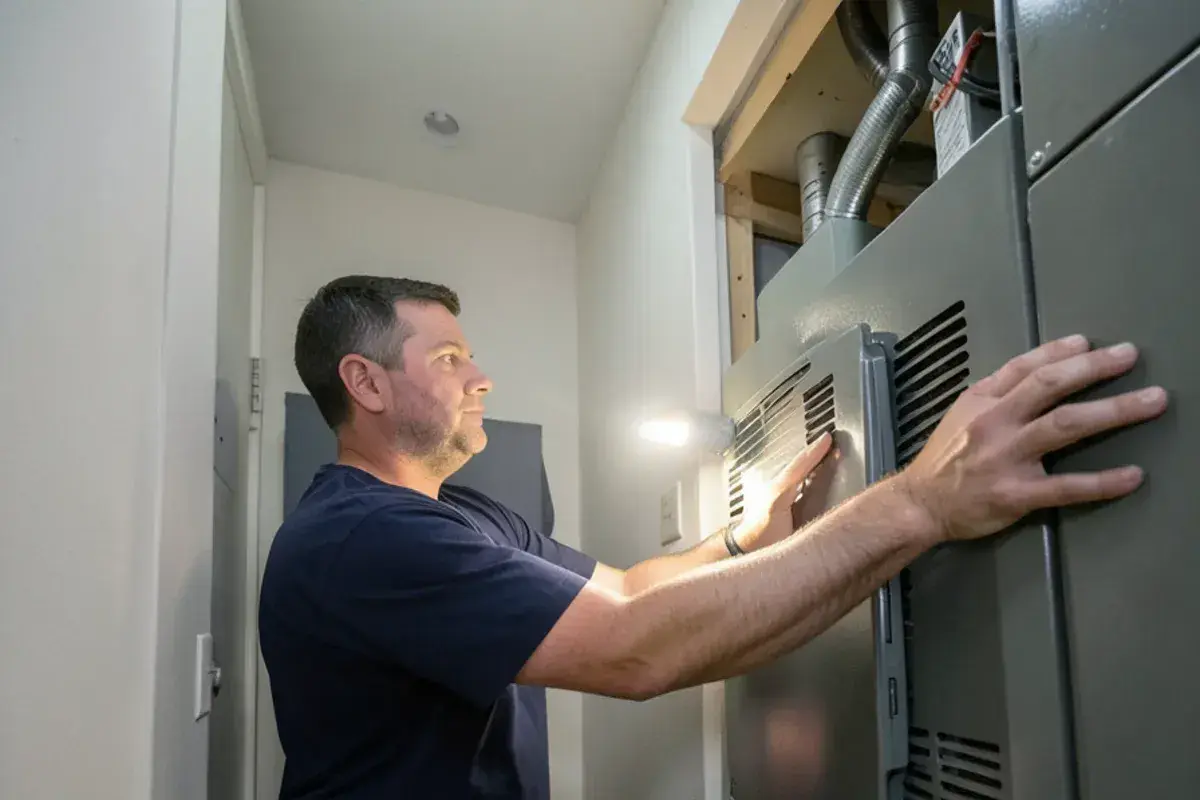
Most gas furnaces still need electricity. Look for a tripped breaker and a wall switch near the unit that looks like a light switch.
Pull the filter
A clogged filter can overheat a furnace until a safety switch shuts the burners off. Replace it if you have a spare.
Seat the door panel
A loose lower panel holds a safety switch open and the furnace will not start. Press it firmly into place.
Give it a few minutes
After any change, wait for the start-up sequence. If it tries, fails and locks out, stop there.
Still no heat in the morning? Call us.
Reach us Monday to Saturday, 9 to 5, and tell us what the furnace did when it tried to start.
- CSLB C-20 #776028
- 4.8 from 16 Google reviews
- Shop in USA Business Park
- Open Mon to Sat, 9 to 5
Why do gas and carbon monoxide come before the thermostat?
A cold night is when a house is shut tight and everyone is asleep. CDC says carbon monoxide symptoms are often flu-like: headache, dizziness, weakness, nausea, vomiting, chest pain and confusion. It also warns that people who are asleep can die before they show any symptoms. So if the whole family feels unwell, do not blame a bug and go back to bed.
A working alarm is the only warning a sleeping house gets. CPSC says to put CO alarms on every level and outside sleeping areas, with battery power or battery backup, and to test them monthly.
What about a pilot light that went out?
Older furnaces and most gravity wall heaters use a standing pilot, a small flame that burns all the time. If yours is out and there is no gas smell, the owner’s manual gives the relight steps for that model. If you are not comfortable doing it, wait.
SoCalGas lists a no-cost pilot relight service, with a furnace safety check on the same visit, at socalgas.com or 1-877-238-0092. Check the current terms when you book. If the pilot lights and goes out again, leave it off, because the part that keeps it lit may have failed.
Newer furnaces have no pilot. They use an electronic igniter, so there is nothing for you to relight. Our furnace repair page covers those faults.
Other systems have their own quirks. A gravity wall heater needs no electricity, so go straight to the pilot. A heat pump blowing cool air in heat mode may be in a defrost cycle, so give it several minutes and check that the thermostat says Heat. Our heat pump repair page covers what comes next if it stays cold.
If the stove and water heater went out along with the furnace, the gas may be off to the whole house. Do not turn the meter back on yourself. Call SoCalGas, because the utility restores service after the piping and appliances are checked.
How do you stay warm safely until morning?
Heating a house the wrong way causes more harm than a cold night does. Close off unused rooms, gather everyone in one room, use extra blankets and layers, and keep the doors shut to hold the heat you have.
| Option | Safe? | Why |
|---|---|---|
| Blankets, layers and one shared room | Yes | No fuel, no fire risk |
| Electric space heater | Yes, with care | Keep 3 feet clear, plug into a wall outlet, no extension cords or power strips |
| Gas oven or stovetop | No | CDC says never heat a house with a gas oven, because of carbon monoxide |
| Charcoal grill or camp stove indoors | No | Both give off carbon monoxide, even with a window open |
| Portable generator indoors or in a garage | No | CDC says to run it outside, more than 20 feet from windows, doors and vents |
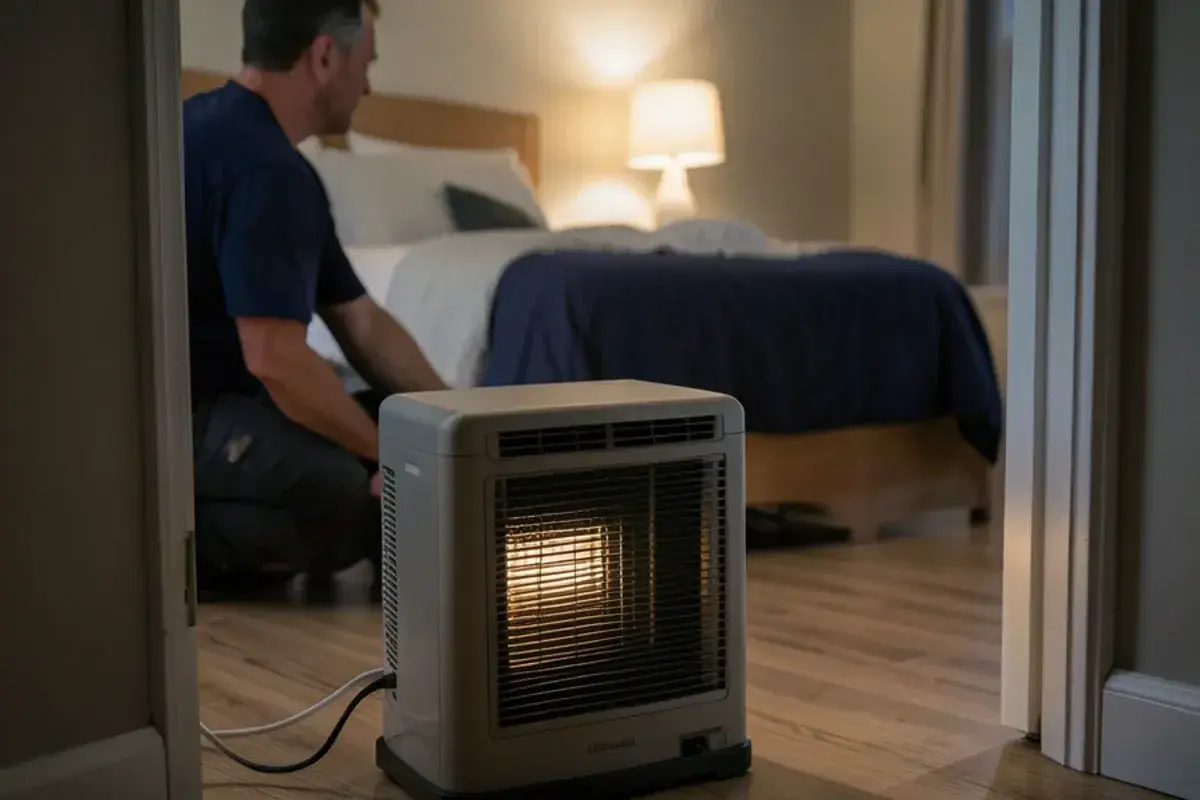
CPSC also advises against leaving a space heater running while you sleep. Turn it off before bed and rely on layers once the room is warm.
California requires CO alarms in homes with fuel-burning appliances. If yours are missing or the batteries are old, fix that before the next cold night, because carbon monoxide has no smell.
When a cold house becomes a health problem
South Gate winters are mild, but CDC names older adults without enough heat and babies sleeping in cold bedrooms among those most at risk of hypothermia. In adults, watch for shivering, exhaustion, confusion, fumbling hands, slurred speech and drowsiness. In infants, watch for bright red, cold skin and very low energy. A body temperature below 95°F needs medical attention right away, so call 911.
Do not wait for those signs if someone at home is frail. Stay with a relative or neighbor who has heat. Ready LA County points people without a working heater to senior centers, community centers, malls and libraries during the day, and 211 LA County can give referrals at any hour.
When should you stop and leave it off?
Any one of these means the furnace stays off until a technician has seen it.
- The breaker trips a second time.
- The furnace fires, shuts off and repeats.
- You hear banging at start-up or see soot near the unit.
- A burning electrical smell comes from the cabinet.
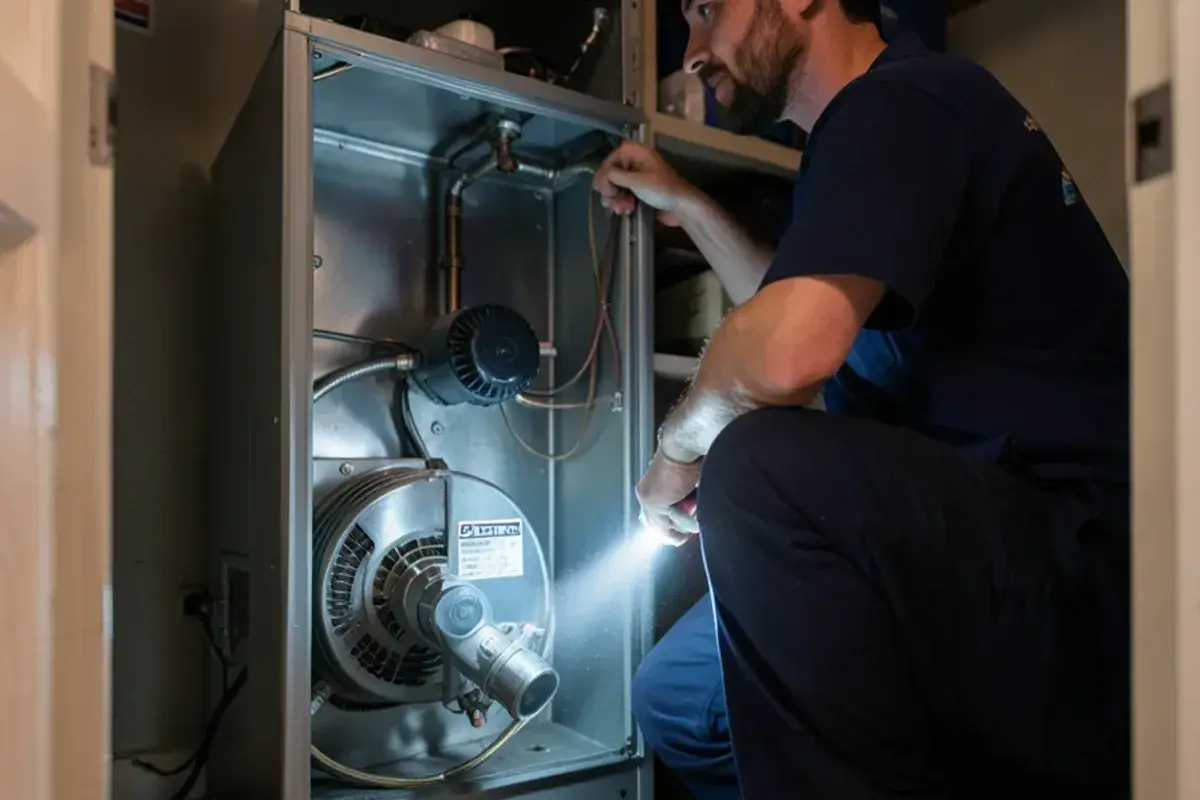
- A control light flashes a pattern. Count the flashes and tell the technician.
Calling for a no-heat repair
Our posted hours are Monday to Saturday, 9 to 5, closed Sunday, so a Saturday evening failure means a Monday call. Our emergency furnace repair page explains how we handle urgent no-heat calls in those hours.
We serve Lynwood, South Gate and the surrounding cities. Have the furnace model, the symptom and any flash pattern ready. A fall furnace tune-up catches dirty flame sensors and weak igniters before the first cold night finds them.
A few notes from tonight make the morning call more useful. Write these down while you remember them.
- The type of heater: gas furnace, wall heater or heat pump
- Which checks you ran, and whether anything changed
- What you heard at start-up: a click, a whoosh, the blower or nothing
- How long it ran before it shut down
- Who is at home, especially infants or older adults
What matters most tonight
Keep the order straight. Gas smell, CO alarm or anyone feeling sick means everyone goes outside and you call 911. With those ruled out, run the five checks and stop at the first sign of a real fault. A furnace left off overnight usually costs less to fix than one forced to keep restarting. Call us in the morning with your notes. We will find the fault, explain it plainly and give you the price before any work starts.
Sources
No Heat at Night questions
Is no heat an emergency in a Lynwood rental?
It can be, depending on the weather and who lives there. Report it to your landlord in writing right away, because California Civil Code 1941.1 lists heating among habitability items. Your lease, a tenant attorney or LA County’s tenant resources decide what happens next. Infants, older adults and anyone ill should go somewhere warm until the heat is back.
Why did my furnace stop working only at night?
Night is simply when it runs hardest. A dirty flame sensor, weak igniter or clogged filter may get through a mild afternoon and fail on the long runs after dark. Old thermostat batteries also tend to show up then. If it runs by day and quits at night, note the times and tell the technician.
Should I switch off a locked-out furnace until the technician comes?
Yes, set the thermostat to Off so the furnace stops trying to restart. Count any flashing control light first, because cutting power at the furnace switch can clear that code, and the code is one of the first things we look at. Then leave it off. If the system is a wall heater, write down whether the pilot is lit.
Furnace still cold after these checks?
Call Proair during business hours, Monday to Saturday, 9 to 5, for a clear, upfront quote on the repair.
- CSLB C-20 #776028
- 4.8 from 16 Google reviews
- Shop in USA Business Park
- Open Mon to Sat, 9 to 5
Related services
Helpful reading
Areas we serve