
Problem solving
Furnace Blowing Cold Air: Causes and Fixes
A furnace blowing cold air most often has the thermostat fan set to On, a clogged filter that tripped the safety limit, or burners that will not light. Check the first two yourself. If you smell gas or a carbon monoxide alarm sounds, stop and get out of the house.
- CSLB C-20 #776028
- 4.8 from 16 Google reviews
- Shop in USA Business Park
- Open Mon to Sat, 9 to 5
By Proair Air Conditioning Services, CSLB C-20 License #776028. Published October 30, 2026. Updated October 30, 2026.
Is a furnace blowing cold air actually a problem?
Maybe not. Many furnaces blow room-temperature air for a moment at the start or end of a cycle, and ducts in a cool attic or crawlspace chill the first air through. Give it a few minutes. If the air warms up, the system is fine. If it stays cold, or the burners shut off and the blower keeps going, keep reading.
Winter nights in South Gate are mild, so a furnace may sit unused for months and then fail on the first cold evening. Dust on burners, weak batteries and a filter left from summer all show up that night.
No heat tonight? Call before it gets colder.
We are open Monday to Saturday, 9 to 5. Call Proair for a diagnosis and a clear, upfront quote.
- CSLB C-20 #776028
- 4.8 from 16 Google reviews
- Shop in USA Business Park
- Open Mon to Sat, 9 to 5
Causes you can check yourself
These take a few minutes and no tools. Do them in order.
- Thermostat fan on On. The blower runs all the time, heat or no heat. Set it to Auto.
- Thermostat mode. Confirm Heat, a setting above room temperature and fresh batteries.
- Dirty filter. Replace it. DOE says to clean or replace furnace filters once a month or as recommended.
- Furnace switch. Look for a light-style switch near the unit. Someone may have turned it off.
- Blower door. Seat the lower panel fully. A door switch cuts power when it sits loose.
- Breaker. One reset is fine. A second trip means stop and call.
- Gas valve. The handle on the supply line should run parallel to the pipe.
- Blocked registers. Open them and clear furniture off the returns.
What should a normal heat cycle sound like?
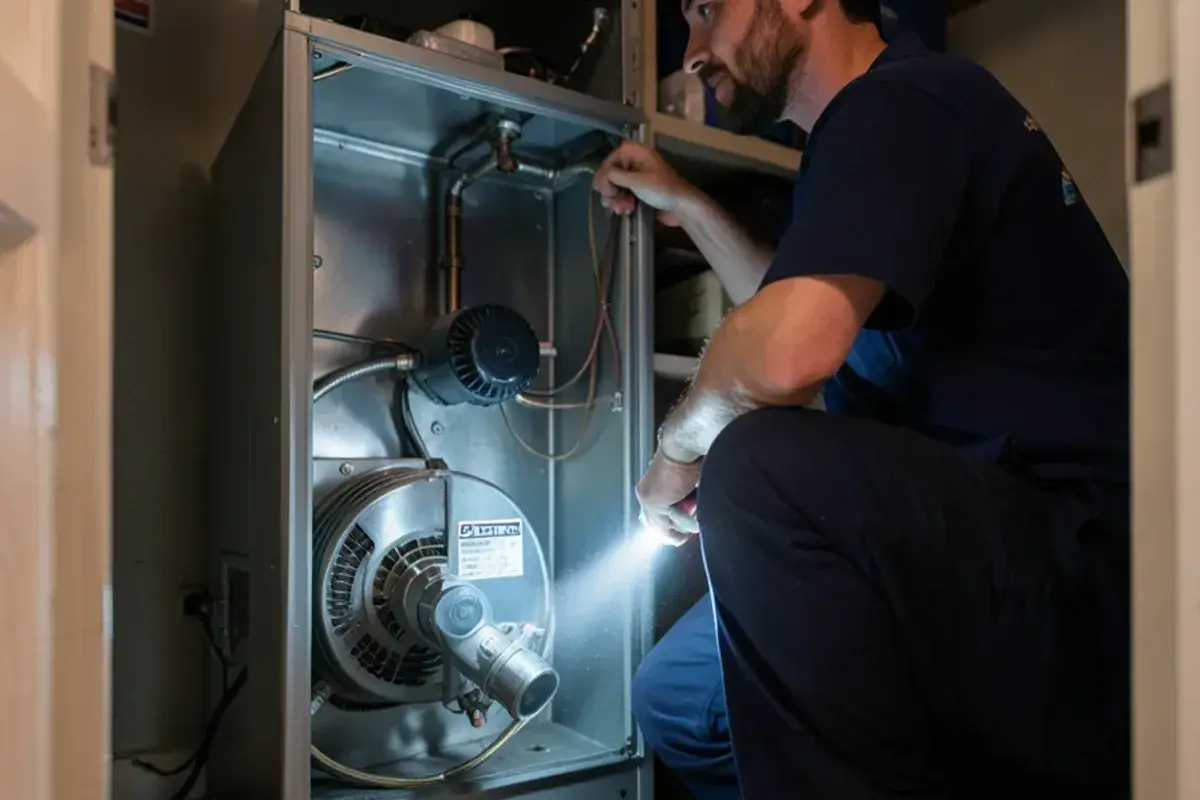
Stand near the furnace while the thermostat calls for heat. Each stage has its own sound, and the point where the sounds stop tells you which group of parts to suspect.
A click
The control answers the thermostat. No click points back to the thermostat, the switch or the breaker.
A small fan
The inducer clears the vent, and a pressure switch proves the draft.
A glow or a tick
The igniter heats up or sparks, sometimes visible through the sight glass.
A soft whoosh
The burners light, and the flame sensor has seconds to prove the flame.
The main blower
After a short delay, warm air moves. If the blower runs and you never heard the earlier stages, the burners never fired.
Older units with a standing pilot skip the first stages, so the sound starts at the burners.
Why does the furnace light, then blow cold?
This is the classic sign of an overheating furnace. A clogged filter or a restricted duct traps heat at the exchanger. The high-limit switch, a safety that watches cabinet temperature, shuts the burners off while the blower keeps running to cool things down. You feel cold air. Then the cycle repeats.
A new filter fixes many of these. If the limit keeps tripping with a clean filter, the cause is usually a weak blower, undersized ducts or closed-off rooms. Do not bypass a limit switch. It is there to prevent overheating and heat exchanger damage, and it calls for furnace repair by a technician.
How warm should the air be?
A kitchen thermometer gives you a number to report. After 10 minutes of heat, read the air at a return grille and at the nearest supply register. The nameplate inside the door lists a temperature rise range, and the difference between your two readings should land inside it. Well above the range points to poor airflow, the same trouble that trips the limit. Well below it can mean weak firing or cold air leaking into the ducts.
What if the burners will not light?
Then the blower has nothing to move but cool air. Ignition faults are the next group, and the table shows how they usually present. These parts sit right beside the gas valve, so they belong to a technician.
| Fault | What it does | Typical sign |
|---|---|---|
| Standing pilot out (older units) | No flame to light the burners | Dark pilot, no ignition sound |
| Hot surface igniter failed | Burners get no spark or glow | Inducer runs, no glow, then lockout |
| Dirty flame sensor | Control cannot prove a flame | Burners light, then drop in seconds |
| Pressure switch or blocked vent | Control blocks ignition | Inducer runs, nothing else happens |
| Clogged condensate drain | High-efficiency units shut down | Water near the unit, repeat lockouts |
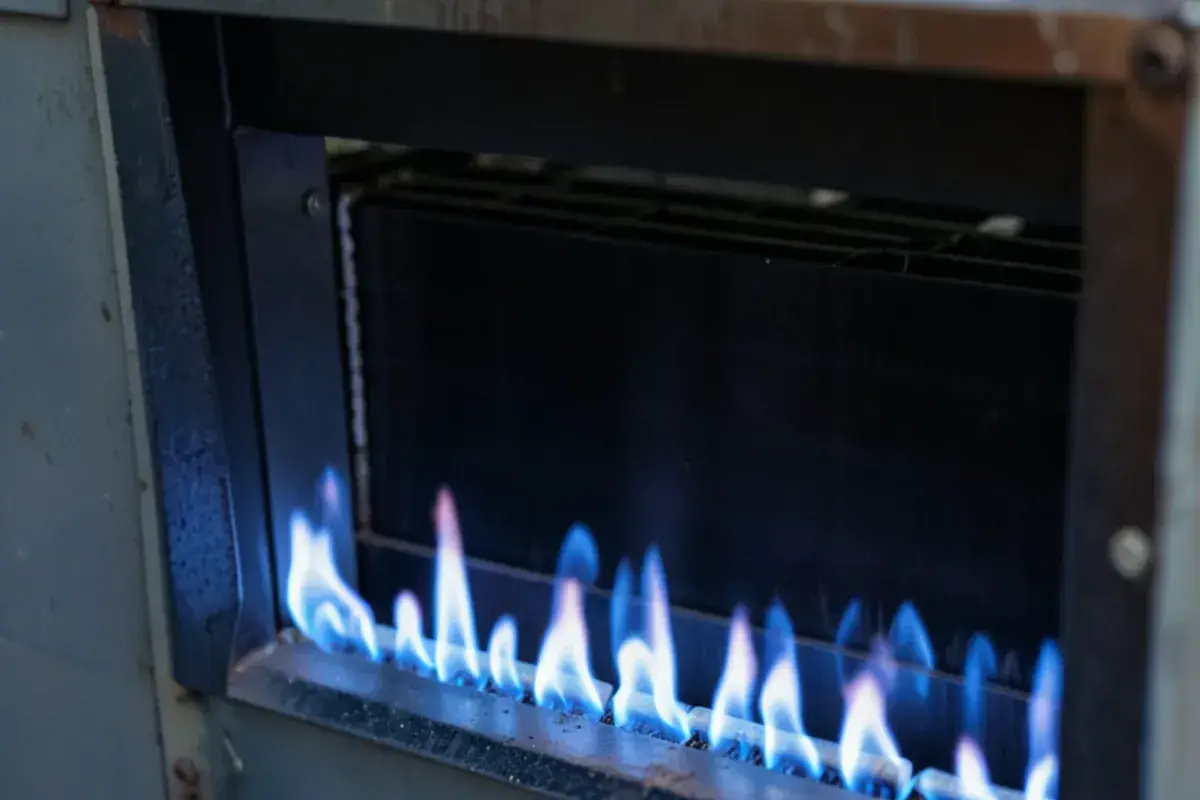
Older floor and wall units often use a standing pilot. If yours is out, follow the lighting instructions printed on the unit, and only if you smell no gas. If it will not stay lit, stop there. Our wall heater repair page covers those units.
What else can cause cold air?
Leaking ducts. A torn return in the attic pulls in cold air and mixes it with the heated air. If only some rooms run cold, the ducts are a strong suspect.
A cracked heat exchanger. This is the part to take seriously. EPA lists cracked heat exchangers among the sources of combustion gases indoors. Cold air alone does not prove a crack, but repeated overheating can stress the metal. Do not run a furnace a technician has flagged for this.
If anyone reports a crack, ask to see it. A photo or camera image of the metal is a fair request before you agree to a new furnace. If replacement turns out to be the answer, a permit and duct testing come with it, and our guide to California energy rules explains both.
Heat pumps and wall heaters behave differently
A heat pump delivers cooler air than a gas furnace, so lukewarm air alone is not a fault. A short spell of cool air can also be a defrost cycle, and our guide to why a heat pump freezes up separates normal from not. In a 1950s South Gate house, a fan-type wall heater with a dead pilot simply blows room air.
How do you avoid the cold-air call next winter?
Have the system looked at before the first cold night. EPA advises a yearly inspection, cleaning and tune-up of central heating systems, including furnaces and flues, because poor maintenance can release carbon monoxide. Our furnace tune-up covers burners, the flame sensor, the limit, the vent and airflow. California also requires CO alarms in homes with fuel-burning appliances, so test yours.
Our shop on Paramount Boulevard in South Gate serves Bell and neighboring cities. If the furnace is old and failing often, compare your options with our guide to furnace replacement cost.
What cold air from a furnace usually comes down to
Start with the fan setting and the filter, since those two are yours to fix. Past that, listen to where the cycle stops and write it down. Leave the burners, the gas valve and the limit switch alone, and shut everything down at any sign of gas or carbon monoxide. Call us with what you heard. We will test the system, explain the fault plainly and give you the price before any work starts.
Sources
Furnace Blowing Cold Air questions
Why does my furnace blow cold air for a minute and then get warm?
That is usually normal. Air sitting in the ducts cools down between cycles, especially in an attic or crawlspace, and it reaches you first. Many furnaces also wait until the heat exchanger warms before the blower starts. If warm air arrives within a few minutes and the house reaches the set temperature, nothing needs repair.
Is it safe to keep running a furnace blowing cold air in South Gate?
Turn it off at the thermostat if the air stays cold, the burners keep cycling or you notice a strange smell. Repeated limit trips stress the heat exchanger. South Gate nights are mild enough that most homes can wait for a daytime visit with extra blankets. Do not heat the house with a gas oven or an outdoor grill.
Can a thermostat cause a furnace to blow cold air?
Yes. A fan set to On runs the blower even when the burners are off, and that alone can feel like cold air. Weak batteries, a wrong mode or a loose wire can also stop the heat call. Try Heat mode, fan on Auto, fresh batteries and a setting a few degrees above room temperature before you book a visit.
What does a blinking light on a furnace control board mean?
It is a fault code. Most newer furnaces flash a pattern on a small light on the control board, and the key is usually printed inside the panel door. Count the flashes before you cut power, because shutting off can clear the code. Tell the technician the pattern, since it points the first test at the right circuit.
Does my landlord have to fix a furnace blowing cold air in Bell?
Likely yes, but your lease and current law decide, so get advice on your own unit. California Civil Code 1941.1 lists heating among habitability items, and about 73.5% of Bell homes are rented, so this comes up often. Report the fault in writing with the date. A tenant attorney or LA County’s tenant resources can tell you what applies.
Furnace still blowing cold?
Call Proair, tell us what you heard and saw, and get a clear, upfront quote before any work starts.
- CSLB C-20 #776028
- 4.8 from 16 Google reviews
- Shop in USA Business Park
- Open Mon to Sat, 9 to 5
Related services
Helpful reading
Areas we serve