
Comparison and decision guides
Ductless Mini Split vs Central Air
Mini split vs central air usually comes down to your ducts. Choose central air when the home already has sound, well-sized ducts and you want every room cooled from one system. Choose a ductless mini split when there are no ducts, the attic will not take them, or you only need to cool an addition or a few rooms.
- CSLB C-20 #776028
- 4.8 from 16 Google reviews
- Shop in USA Business Park
- Open Mon to Sat, 9 to 5
By Proair Air Conditioning Services, CSLB C-20 License #776028. Published October 30, 2026. Updated October 30, 2026.
Mini split vs central air: the short comparison
A central system pushes air through ducts from one air handler. A mini split sends refrigerant through small lines to one or more wall or ceiling heads, and each head cools its own room. Almost every other difference flows from that.
| Factor | Ductless mini split | Central air |
|---|---|---|
| Ducts | None needed | Required, and they must be tested on replacement |
| Temperature control | Room by room | One zone unless the system is zoned |
| Indoor look | Visible head in each room | Ceiling or wall registers only |
| Filters | Washable filter in each head | One central filter, easy to upgrade |
| Heating | Most models also heat as heat pumps | Needs a furnace or a ducted heat pump |
| Best fit | Additions, garages, homes with no ducts | Homes with sound ducts and open attics |
Not sure your house can take ducts? Call us.
Tell us the age of the home and which rooms run hot. Call for a clear, upfront quote on the system that fits.
- CSLB C-20 #776028
- 4.8 from 16 Google reviews
- Shop in USA Business Park
- Open Mon to Sat, 9 to 5
Why do ducts decide most of these jobs?
Ducts lose air. ENERGY STAR says about 20 to 30 percent of the air moving through a typical duct system is lost. Ducts in a hot attic also pick up heat on the way to the room. A mini split skips that path, which is its biggest advantage.
Good ducts change the math. ENERGY STAR itself notes that homes with existing ducts may be better served by a ducted heat pump. If your ducts test well, or can be sealed at a sensible cost, you keep whole-home air movement and one filter to manage.
What happens in a 1950s attic
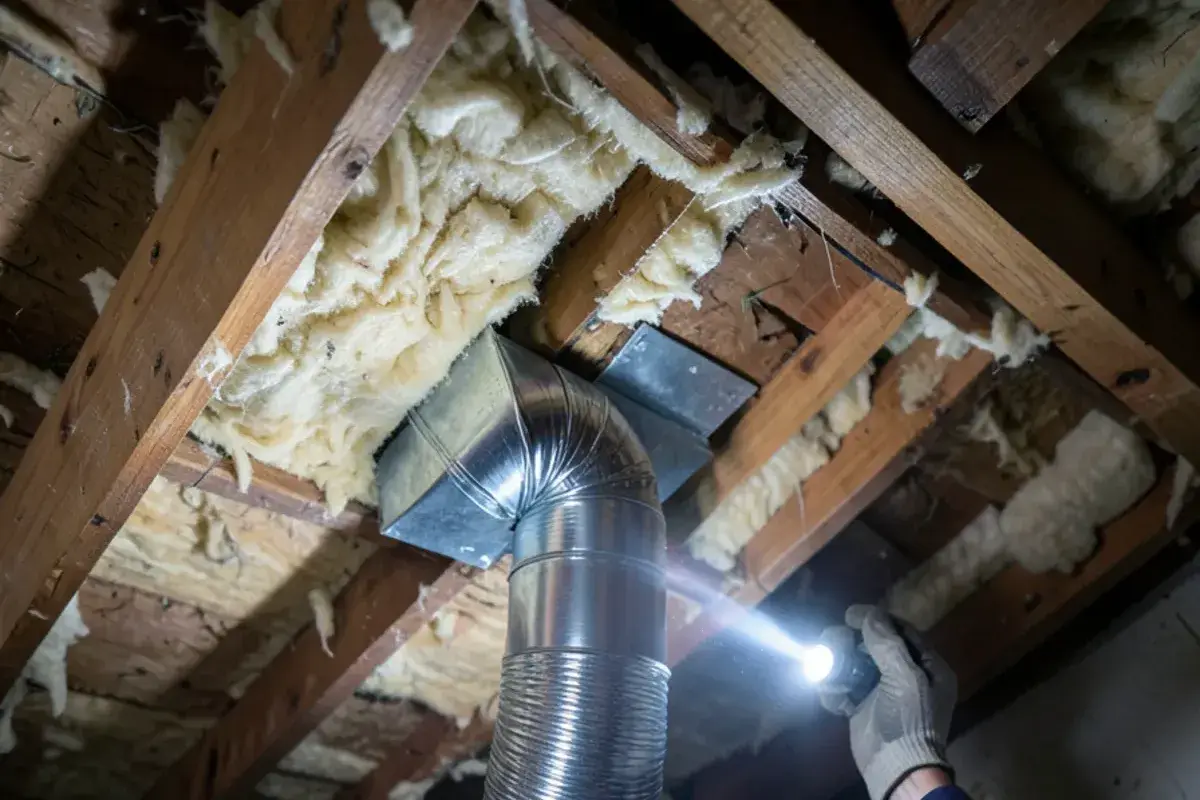
South Gate's median home dates to 1952, and nearly half the housing stock is from the 1940s and 1950s. Many of those homes were never designed around central air. Low roof framing leaves little room for an air handler or for supply trunks sized to move cooled air.
That does not rule out central air. It means a central air addition starts with a look in the attic and a room-by-room load calculation, before anyone picks equipment.
When does a ductless mini split win?
ENERGY STAR lists older homes without ductwork, additions and rooms with hot or cold spots as good candidates. That matches what these houses need. A ductless mini split installation makes the most sense in these cases:
- The home has wall heaters and no ducts at all.
- You added a room, a converted garage or a back unit that the main system never reached.
- A home office or bedroom runs hot and the rest of the house is fine.
- People in the home want different temperatures at the same time.
- You want cooling and heating from one outdoor unit without opening ceilings.
When is central air the better call?
Central air wins when you want every room conditioned, the home has several small rooms and you would rather not see a head in each one. It also wins on filtration, because a central return can carry a thicker media filter. Bedrooms with closed doors cool better with ducted supply than from a single head in a hallway.
Some homes in Bellflower and other postwar tracts run a package unit, where cooling and heating sit in one cabinet. Replacing a complete package system still counts as a duct-testing trigger in California, so budget for that review. Bellflower’s median home dates to 1966 and 60.7% of its occupied homes are rented (Census ACS), so the owner often makes this call.
What does each option cost to install?
The ducts swing the price more than the equipment does. HVAC Project Cost’s comparison guide, updated August 2, 2026, lists the installed figures below. They are published ranges, not South Gate bids and not Proair prices.
| System | Published range | What it covers |
|---|---|---|
| Central AC on existing ducts | $3,500 to $7,500 | Ducts stay in place |
| Central AC with new ductwork | $8,000 to $16,000 | New duct system included |
| Mini split, 1 zone | $2,000 to $5,000 | About 400 to 600 sq ft |
| Mini split, 2 zones | $4,000 to $8,000 | About 800 to 1,200 sq ft |
| Mini split, 3 zones | $6,500 to $11,000 | About 1,200 to 1,800 sq ft |
| Mini split, 4 zones | $8,500 to $14,000 | About 1,600 to 2,400 sq ft |
Read the table by what your house already has. With usable ducts, central air starts lower, and DOE notes a mini-split can cost 30 percent more than adding an AC to an existing duct system. With no ducts, one or two zones sit well under a new duct job, and at four zones the two ranges overlap.
Older houses add lines neither range may show: a panel upgrade, patching and a test of old duct wrap. Ask each bidder to list them.
Which one costs less to run?
It depends on how you live in the house. A mini split loses nothing to ducts and can sit idle in an empty room, so a household cooling two rooms can use less power. A central system cools the whole house each time it runs, and sealing its ducts narrows that gap. The trade-off is comfort: a room with its head switched off is left to warm up.
Which system cleans the air better?
Central air does, as long as the return can hold a good filter. EPA says ductless mini-splits mainly treat the room they sit in, and only while they run.
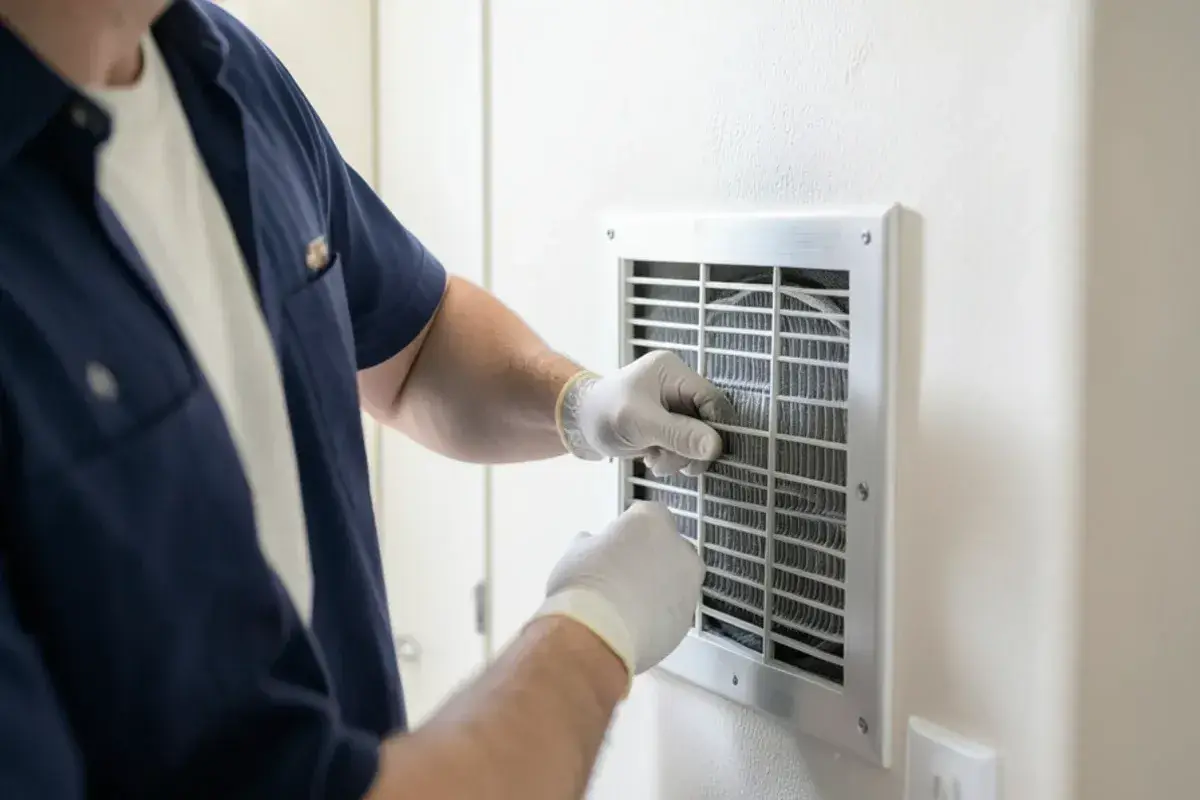
EPA’s test for a high-efficiency claim is MERV 13 or higher. Our guide to smoke and indoor air in LA County covers what to do without it. Old return slots can be thin, so ask what yours will hold before you count on this advantage.
What should you ask about permits and installation?
Either path needs a permit in South Gate, where the city's page says improvements to mechanical and electrical systems require one. Under the 2025 Energy Code, replacing central equipment triggers sealing and ECC-Rater verification of the connected ducts. An ECC-Rater (formerly called a HERS rater) is the independent tester, and contractors cannot self-certify that work.
- Sizing: ask for a Manual J load calculation. Oversized systems short-cycle, and an oversized head can run so briefly that a room feels clammy.
- Efficiency: split ACs under 45,000 Btu/h must meet 14.3 SEER2 in the Southwest region, and split heat pumps must meet 14.3 SEER2 and 7.5 HSPF2. Your quote should name the rating.
- Refrigerant: new equipment generally uses R-454B or R-32. Ask which refrigerant the quote specifies.
- Electrical: ask whether the panel can carry the new circuit, and list any upgrade as its own line.
- Upkeep: each mini split head has its own filter and drain, so more heads means more to clean.
Can you use both?
Yes, and many older homes end up there. A central system keeps the main house comfortable while a single head handles a garage conversion or back room the ducts never reached. Extending ducts into an addition can overload a system that was sized for the original house, so a separate head is often the cleaner fix.
If you are starting from a failed system, get the replacement priced first and the mini split priced as an add-on. Our AC replacement page explains what goes into that quote.
How do you decide for your own house?
Count the rooms you cool
List the rooms you use on a hot afternoon. Two rooms lean toward heads. Every room leans toward central air.
Look for what is already there
Registers and a return grille mean ducts. Look into the attic from the hatch, and leave old duct wrap alone.
Test the ducts you have
A leakage test shows whether they are worth keeping. The replacement limit is 10% total, or 7% to outside.
Price the same rooms both ways
Have each quote name the rooms, the circuit, the drain route, the permit and any testing.
Let the ducts and the rooms make the call
Sound ducts and a whole house to cool point to central air. No ducts, a low attic or one stubborn room point to a mini split. Call us with the age of your home and the rooms that run hot. We will look at the ducts, the attic and the panel, explain what fits and give you a clear, upfront quote before any work starts.
Sources
- ENERGY STAR: Ductless heating and cooling
- ENERGY STAR: Duct sealing
- California Energy Commission: 2025 Single-Family Compliance Manual, Chapter 9
- City of South Gate: Building Permits and Inspections
- HVAC Project Cost: Mini split vs. central AC cost (2026)
- U.S. Department of Energy: Energy Saver 101, Home Cooling
- U.S. EPA: Do ductless mini-split heat pumps filter fine particles?
- U.S. DOE Building America: Ductless mini-split heat pump comfort evaluation
Mini Split vs Central Air questions
Is a mini split cheaper than central air for an older South Gate home?
It depends on what the house already has. With sound ducts, replacing a central system can cost less than several heads. With no ducts, a one-room or two-room mini split usually avoids the ceiling and attic work of a new duct run. Ask for both prices, and make sure each quote counts electrical work, permits and rater testing.
How many mini split heads does a small house need?
The count comes from the load calculation and the floor plan, not a rule of thumb. Closed-door rooms usually need their own head or a ducted option, because cooled air will not turn corners well. A small open plan may run on fewer heads than you expect. Ask your installer to show each room on the Manual J report.
Does a ductless mini split need a Title 24 test in South Gate?
No, not for duct leakage, because a wall-mounted system has no ducts to test. The CEC manual still lists a newly installed mini-split among the alterations the Energy Code covers, and South Gate requires permits for mechanical and electrical work. A concealed ducted head can change the answer, so confirm your layout with Building and Safety at (323) 563-9549 or an ECC-Rater.
Will a mini split filter wildfire smoke out of a Southeast LA home?
No, not on its standard filter. EPA says ductless mini-splits generally do not filter fine particles, so look for a MERV 13 rating before you trust a claim. Without one, run a portable air cleaner in the room you use most on smoky days, since a head only treats its own room.
Want both options priced for your house?
Call Proair for a clear, upfront quote. We are open Monday to Saturday, 9 to 5.
- CSLB C-20 #776028
- 4.8 from 16 Google reviews
- Shop in USA Business Park
- Open Mon to Sat, 9 to 5
Related services
Helpful reading
Areas we serve