
Problem solving
Signs Your Ductwork Is Leaking Conditioned Air
The clearest signs of leaky ducts are rooms that never reach temperature, high bills in summer and winter, stuffy air and extra dust. ENERGY STAR estimates a typical house loses about 20 to 30 percent of the air moving through its ducts. A duct leakage test tells you where your own home stands.
- CSLB C-20 #776028
- 4.8 from 16 Google reviews
- Shop in USA Business Park
- Open Mon to Sat, 9 to 5
By Proair Air Conditioning Services, CSLB C-20 License #776028. Published October 30, 2026. Updated October 30, 2026.
What are the signs of leaky ducts?
No single symptom proves it. Two or three together make a strong case. These come from ENERGY STAR’s duct guidance plus what a technician checks at the house.
- One or two rooms run hotter or colder than the rest.
- Rooms feel stuffy and never get comfortable.
- Your electric or gas bills stay high in both summer and winter.
- Weak airflow at far registers, strong airflow near the unit.
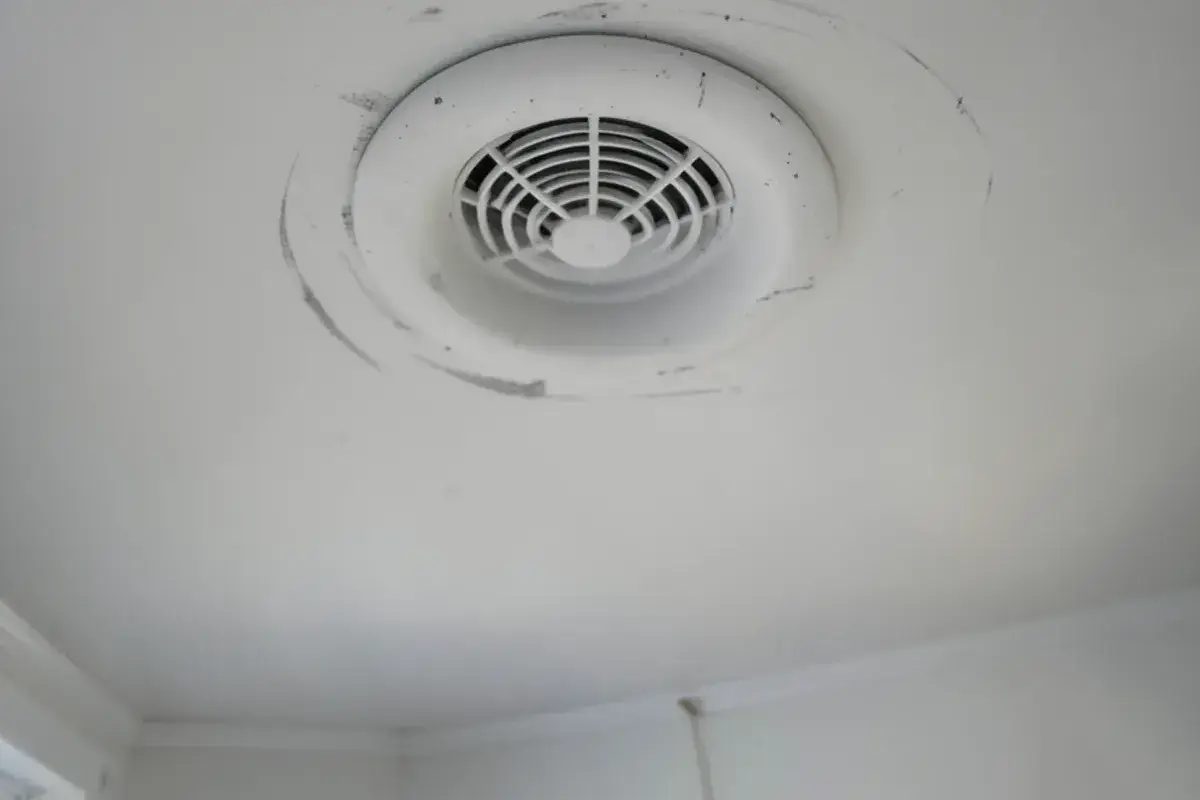
- Dust returns fast, or streaks show around registers.
- The system runs long and struggles on moderate days.
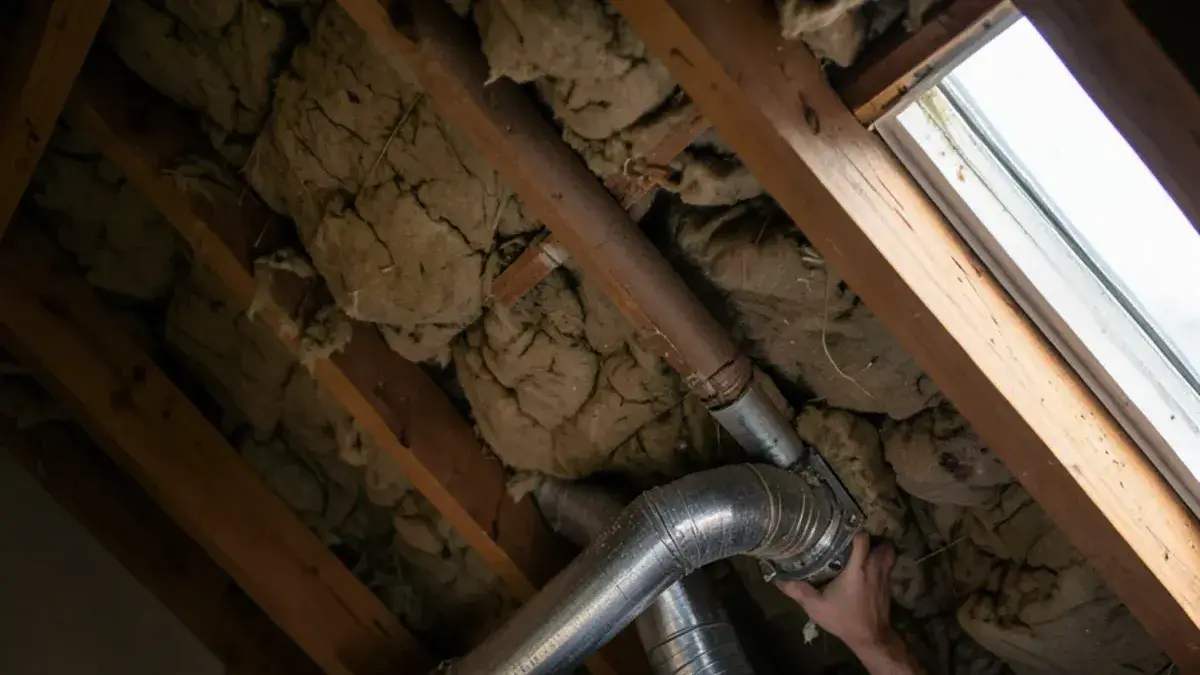
- You can see tangled, kinked or crushed flex duct.
- Your ducts sit in an attic, crawlspace or garage.
That last one is more a risk factor than a symptom. The city’s housing element puts almost 50% of South Gate homes in the 1940 to 1959 build years, and their ducts often run through tight attics and crawlspaces. Every leak there pushes conditioned air into a hot or cold space, or pulls dirty attic air in.
Supply leaks and return leaks behave differently
Supply ducts carry conditioned air to the rooms, so a leak there throws away air you paid for, and the far rooms run short. Return ducts pull house air back to the unit, so a leak there drags in attic heat and dust.
Rooms that never cool down? Call Proair.
We can check the duct run, explain what we find and give you a clear, upfront quote on any sealing.
- CSLB C-20 #776028
- 4.8 from 16 Google reviews
- Shop in USA Business Park
- Open Mon to Sat, 9 to 5
Where do ducts usually leak?
Leaks cluster at joints. The straight runs usually hold up longer than the connections. ENERGY STAR flags the spots where vents and registers meet floors, walls and ceilings as common leak and disconnect points. The table gives the usual suspects and what you would notice.
| Location | What goes wrong | What you notice |
|---|---|---|
| Register boots | Gap between boot and ceiling or floor | Dust streaks, weak register |
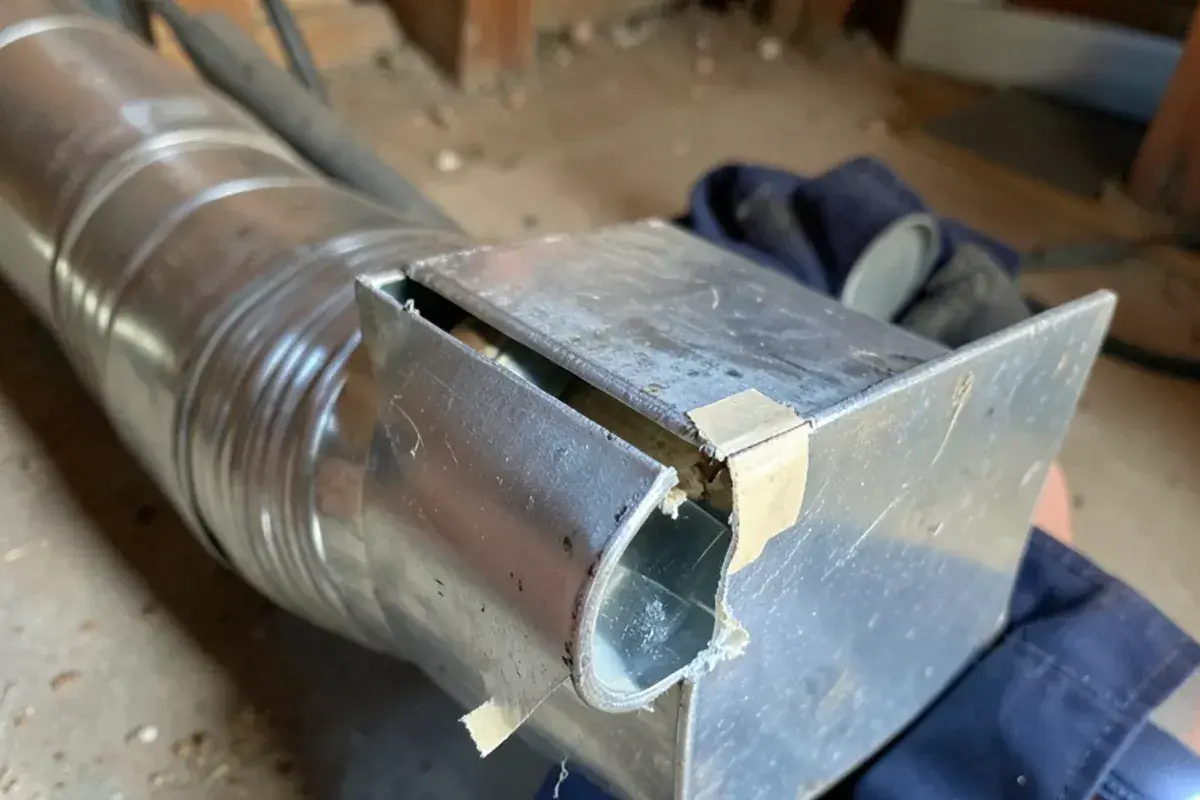
| Flex-to-metal joints | Tape dries out and lets go | A whole room goes warm |
| Plenum at the unit | Unsealed seams near the air handler | Noise, lost airflow |
| Return ducts | Pulls in attic or crawlspace air | Dust, odors, hot air in cooling |
| Crushed flex runs | Foot traffic or stored items pinch the duct | Low airflow, not leakage |
What can you check without tools?
Energy Trust of Oregon publishes a simple homeowner check, and it works in any climate.
- Run the system with every register open and confirm air comes out of each one.
- Listen at the registers and the return grille for a whistle or a hiss.
- With the system running, hold a hand near any joint you can safely reach. Air against your palm means a loose connection.
- Look for gaps, tears, old duct tape and discolored insulation.
- Tie a ribbon on each bad spot so a technician can go straight to it.
In an attic, stay on the joists and go up in the cool of the morning. A foot through the ceiling costs more than the leak.
How do you confirm a duct leak?
Measure it. Symptoms suggest a leak, and a test gives you a number. A technician can also find problems with a look in the attic, but the test is what tells you how much air is getting out.
Walk the rooms
Note which registers run weak and which rooms lag. A floor plan sketch helps.
Inspect what you can reach
Look at the unit, the plenum, and visible attic or crawlspace runs.
Run a duct leakage test
A calibrated fan pressurizes the sealed-off ducts and measures how much air escapes.
Find the spots
Theatrical smoke, or a close look at each joint, shows where the air is leaving.
Seal and retest
Fix the joints, then test again so you can see the difference in the number.
California’s 2025 Energy Code gives you a yardstick. When equipment is replaced, existing ducts must hit 10% total leakage, or 7% to outside. If neither can be met, all accessible leaks are sealed and verified by visual inspection and smoke test, and ducts in garages have a 6% limit. An ECC-Rater (formerly called a HERS rater) does that verification. Our energy rules guide covers the details.
Can you seal ducts yourself?
You can fix small, reachable joints. ENERGY STAR recommends mastic sealant or metal tape, and insulating the ducts you can access. It says never to use duct tape, because it does not last. Check the register connections first, since those are often the easiest to reach.
Most people hire this out. A cramped attic, a long run or any leak you cannot see calls for a pro. Most heating and cooling contractors repair ductwork, and our duct repair service covers sealing and replacing damaged runs.
Can a duct leak be a safety problem?
It can, in a home with gas appliances. ENERGY STAR warns that leaky ductwork may cause backdrafting, which draws combustion gases such as carbon monoxide back into the living space. EPA ties the same risk to leaky returns, because they can put a house under negative pressure. If a gas furnace or water heater sits near the return, say so when you call.
Sealing shifts house pressure too, so the test belongs after the work. ENERGY STAR tells homeowners to look for a contractor who checks for backdrafting and runs a combustion safety test once the ducts are sealed. California also requires CO alarms in dwellings with fuel-burning appliances, so test yours too.
Is fixing leaky ducts worth it in Southeast LA?
Usually, if the system has years left. Sealing keeps the air you paid to cool inside the house. It also helps a tired system, and it can head off the wrong repair. If replacement is coming soon, price the ducts at the same time, since the rules will bring them into scope anyway. See AC replacement for that path.
ENERGY STAR says leaky ducts can cut system efficiency by as much as 20 percent, and that sealing and insulating can often pay for itself. We give no duct price here, because published figures disagree widely and none is local.
Duct cleaning is a separate job and does not stop a leak. Proair’s South Gate shop covers Cudahy, Bell and nearby cities. Before any visit, clear a path to your attic hatch so the run can be reached.
Census estimates put 47.0% of Norwalk homes in the 1950s, so a first leakage number there is worth having before any equipment quote. In Cudahy, 85.8% of homes are rented, so send the owner your room notes and let them approve the visit.
What a good duct job should include
Hold any quote against ENERGY STAR’s contractor list.
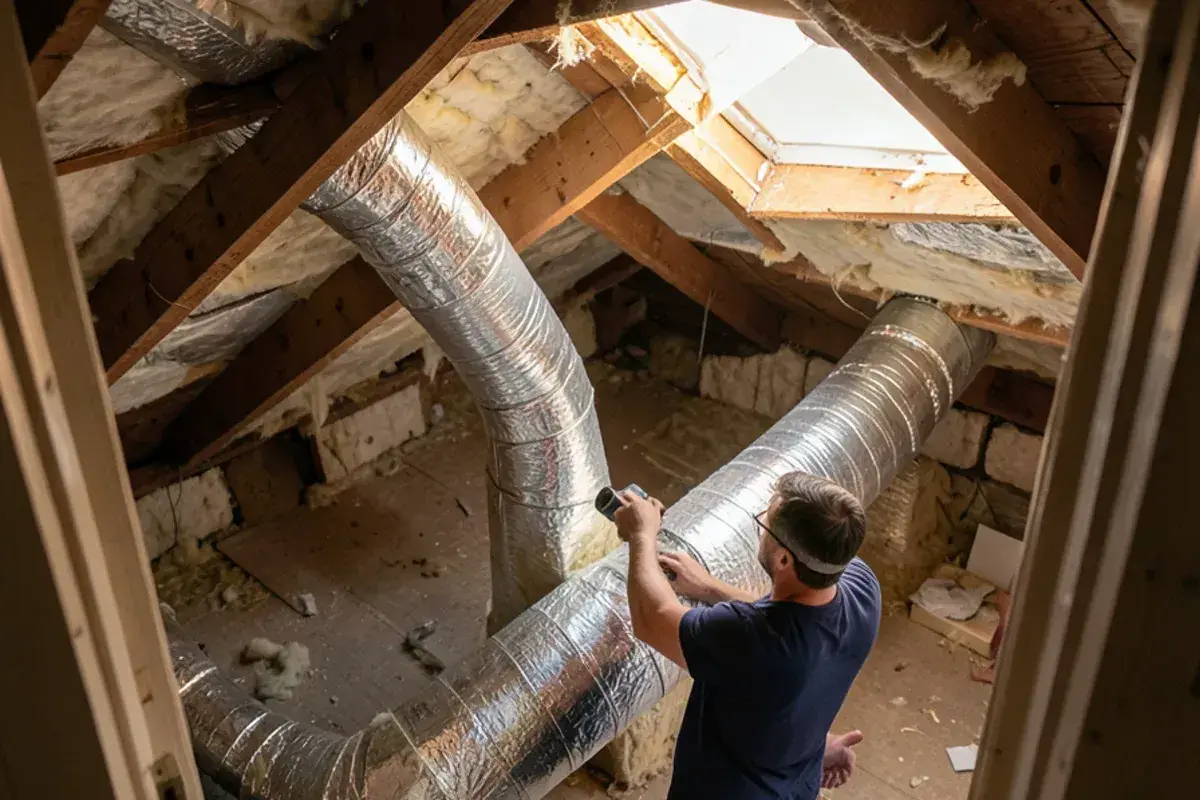
- An inspection of the whole system, attic and crawlspace included.
- A supply and return balance check, since ENERGY STAR says many returns are too small.
- Repairs to disconnected ducts, with tangled or crushed flex straightened out.
- Leaks sealed with mastic, metal tape or an aerosol sealant, and registers sealed tightly to the ducts.
- Insulation on ducts in attics, crawlspaces and garages. ENERGY STAR says R-6 or higher, and California wants R-8 on new ducts in zone 8.
- A new filter, plus an airflow check once the repairs are done.
Leaky ducts are easy to suspect and easy to measure
Two or three signs are enough to justify a look. Walk the registers, check what you can reach and write down which rooms lag. Then get a number, because a leakage test beats a guess about a new AC. Call us with your list of problem rooms. We will trace the run, explain what we find and give you a clear, upfront quote first.
Sources
- ENERGY STAR: Duct Sealing
- ENERGY STAR: When Is It Time to Replace?
- California Energy Commission: 2025 Single-Family Compliance Manual, Chapter 9
- CSLB: A Consumer’s Guide to Asbestos
- ENERGY STAR: Duct Sealing flyer
- EPA: Addressing Indoor Environmental Concerns During Remodeling (archived page)
- Energy Trust of Oregon: How to check for leaky air ducts
- Census Reporter: Cudahy, CA, ACS 2020 to 2024
- Census Reporter: Norwalk, CA, ACS 2020 to 2024
Signs of Leaky Ducts questions
Do leaky ducts make a house dusty in South Gate?
They can. ENERGY STAR says leaky ducts may pull particles in from attics and crawlspaces. In an older South Gate home, a leak on the return side draws that dusty air into the system and sends it through the rooms. Check the filter first. If it loads quickly and dust returns within days, ask for a duct inspection.
How much does it matter if only one duct is disconnected?
It can matter a lot. A single loose connection sends that room’s whole air supply into the attic, so the room runs warm and the system runs longer. It is also one of the cheaper duct fixes. If one room suddenly stopped cooling, have the run to that register checked before you consider bigger repairs or new equipment.
Will sealing ducts lower my Southern California Edison bill?
It often helps, but no one can promise a figure. Savings depend on how much air the ducts are losing and how long the system runs. ENERGY STAR estimates typical duct loss at 20 to 30 percent. A before and after leakage test gives you a real number for your home, and the bill will show the effect over a full season.
Can leaky ducts cause carbon monoxide problems in a South Gate home?
Yes, in a home with gas appliances. ENERGY STAR warns that leaky ductwork may cause backdrafting, which draws combustion gases back indoors. Ask for a combustion safety test after any sealing, and keep working CO alarms near your bedrooms. If an alarm sounds, get everyone out and call 911 from outside. For a gas smell, call SoCalGas at 1-800-427-2200.
Why do my air ducts whistle when the system is running?
Air is usually squeezing through a small gap or a return that is too small. ENERGY STAR says many systems have undersized returns. Start with the filter, then note where the sound is. A whistle at one register points to that boot or joint. A whistle at the return grille calls for a measured airflow check.
Think your ducts are leaking?
Call Proair to have the run checked. You will hear what we find in plain words and get a clear, upfront quote before any work.
- CSLB C-20 #776028
- 4.8 from 16 Google reviews
- Shop in USA Business Park
- Open Mon to Sat, 9 to 5
Related services
Helpful reading